We watched India's
agri-waste go unused.
We decided to
do something.
This is the story of how agricultural waste became clean energy, how unused residue became income for farmers, and how one company decided to connect the dots.
500 million tonnes of potential, going unused every year
Every year, after the harvest, Indian farmers face the same problem: mountains of crop residue with nowhere useful to go.
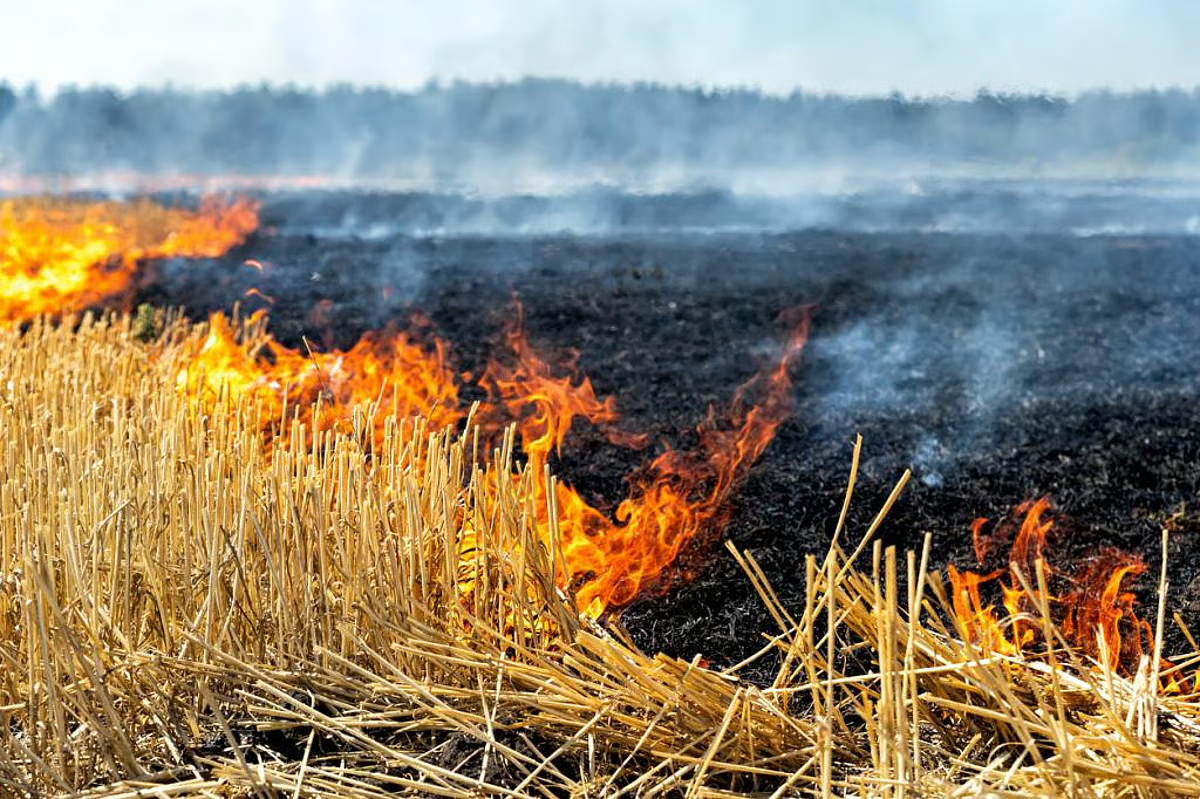
Some of it gets burned in open fields. Some rots in place. Some is dumped. In any case, the energy locked inside it — enough to heat factories, power boilers, fuel industrial operations — is wasted. And no one built them a better option. The smoke from open burning visible from satellites is just the most visible symptom of a much larger inefficiency.
Meanwhile, fifty kilometers away, a factory burns coal to generate the same heat that just went up in smoke from a field. Two crises, happening simultaneously, neither aware the other holds the solution.
That disconnection — between the farmer with waste and the industry with demand — is the problem Peltra Energy was built to solve.
The scale of the opportunity
India generates over 500 million tonnes of agricultural residue annually. Less than 30% is currently utilised. The rest is burned, contributing to some of the worst air quality events in the world.
Stubble burning — Punjab, India
A practice that wastes energy and destroys air quality every harvest season
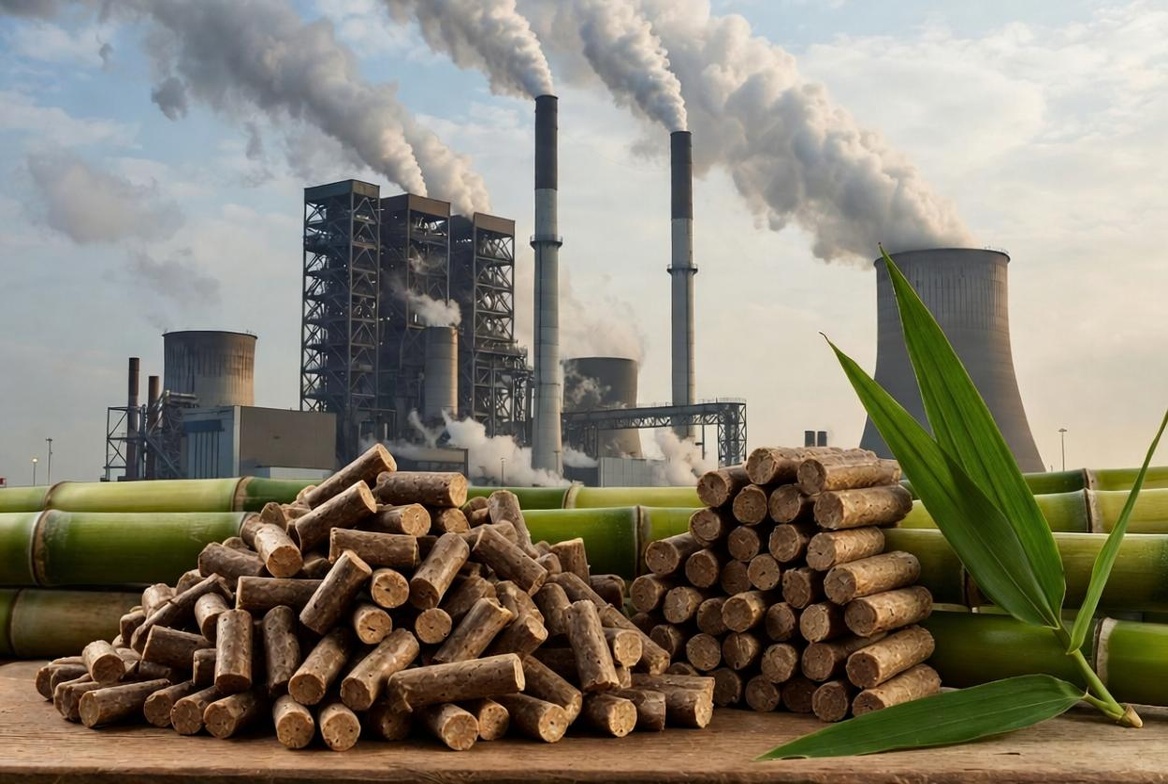
Biomass pellets — farm waste, compressed
Same calorific value as coal. Carbon-neutral. Made from what would have burned for nothing.
The waste was never waste. It was always fuel.
Crop residue is carbon-dense organic matter. Compressed into pellets or briquettes, it becomes one of the most efficient solid fuels available — at roughly the same calorific value as coal, with 60% lower CO₂ emissions.
The technology to do this isn't new. The process isn't complicated. What was missing was the system — the supply chain, the market information, the distribution, and the trust — that would make it easy for a factory manager in Maharashtra to buy biomass pellets from a farmer in Punjab.
That's what we set out to build. Not a product. A system. An ecosystem where the economics of doing the right thing actually work for everyone involved.
Because environmental solutions that don't make economic sense don't scale. And we're not interested in solutions that don't scale.
Same energy output
as coal per unit weight
Carbon neutral
the CO₂ was already in the cycle
Zero new emissions
from deforestation or mining
Renewable every season
harvest replenishes supply
We are not saving the environment as a side effect of doing business. Saving the environment is the business.
Peltra Energy
Protecting forests by making the alternative easier
Every tonne of biomass that replaces coal is a tonne of CO₂-equivalent that doesn't enter the atmosphere. Every household that switches from firewood to agri pellets is a tree that doesn't get cut.
We don't ask people to sacrifice convenience for the environment. We build the supply chains, the market infrastructure, and the digital tools that make biomass just as easy as the dirty alternative — and then we let the economics do the rest.
Through Pelletrates, we democratised market intelligence — giving every buyer and seller in India free access to real-time pricing, regional data, and industry trends that were previously locked behind expensive consultants or insider networks.
Through Pellet Bazaar, we brought biomass to the B2C consumer — the household that would otherwise default to firewood or coal, the small business that still burns coal because nobody ever offered them anything better.
The ripple effect
Each farmer partnership we build creates residue income that reduces the economic pressure to clear additional land. Each industry we convert reduces the market for coal. The benefits compound — quietly, measurably, permanently.
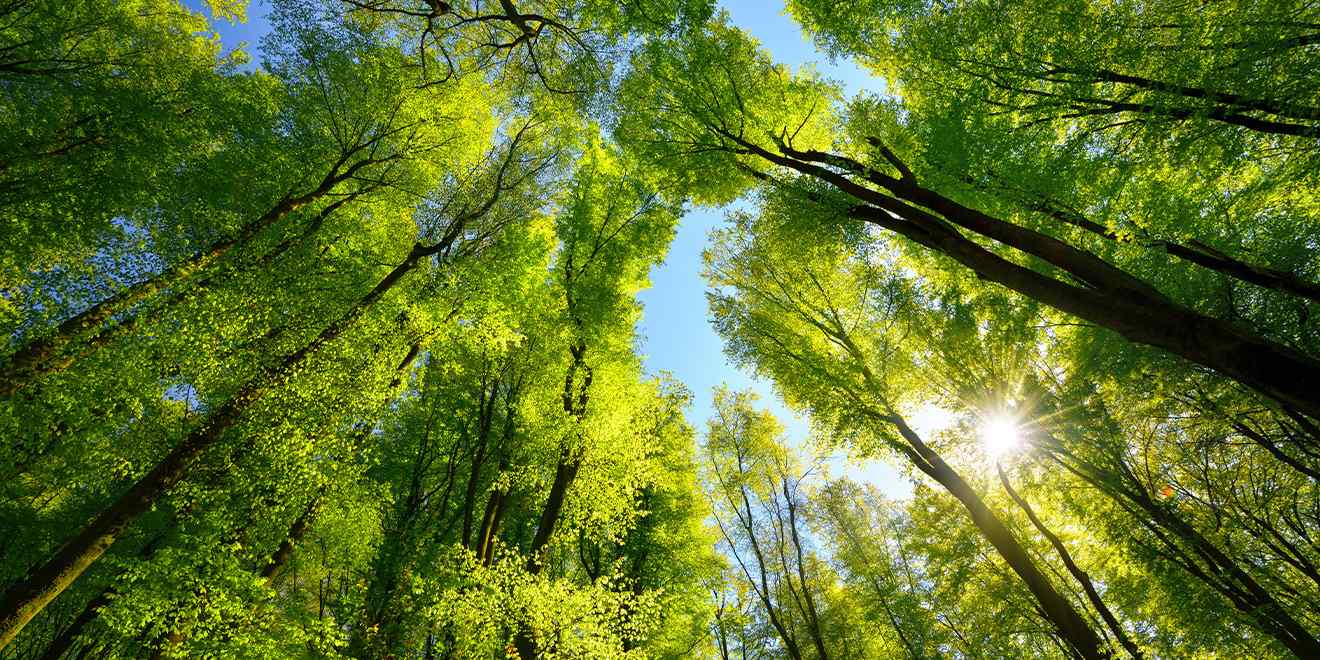
Forests we're helping protect
Every biomass pellet that replaces firewood or coal is one less tree that needs to be cut.
What we are actively doing for the environment — right now
These aren't pledges on a sustainability page. These are operational realities built into how Peltra works every day.
Zero deforestation supply chain
We have never sourced from forests and never will. Every unit of biomass in our supply chain comes from agricultural residue — rice straw, sugarcane bagasse, cotton stalks, mustard stalks. Not a single tree.
Measurable, verified emission reductions
Each tonne of biomass deployed displaces approximately 0.8 tonnes of CO₂-equivalent versus coal. We don't estimate — we track, document, and report this for every client relationship.
Carbon credit facilitation
We help businesses convert their biomass adoption into verified carbon credits. Environmental action becomes a documented, tradeable asset. Good for the planet, good for the balance sheet.
Farmer residue income programs
We've built structured residue collection partnerships across India. Farmers earn additional income from crop waste they previously burned. Clean air is the side effect. Livelihoods are the outcome.
Closed-loop circular economy
Ash from biomass combustion returns to agricultural fields as mineral-rich fertilizer. Nothing leaves the system as waste. The carbon cycle is complete — crop residue becomes fuel becomes soil amendment becomes next crop.
Free market intelligence for all
Through Pelletrates, we give the entire biomass industry free access to pricing data and market intelligence. A better-informed market makes better procurement decisions — and better procurement decisions lead to better environmental outcomes at scale.
Core values
Sustainability
Environment-first in every decision, every supply chain, every partnership. Non-negotiable.
Integrity
Transparent operations, honest emission reporting, zero greenwashing. Ever.
Partnership
We grow when farmers grow, when industries thrive, when communities benefit.
Innovation
Technology and market data to make clean energy adoption frictionless and scalable.
Be part of the solution
Whether you're an industry ready to reduce emissions, a farmer with residue to monetise, or a household switching from coal — there's a place for you in this chain.